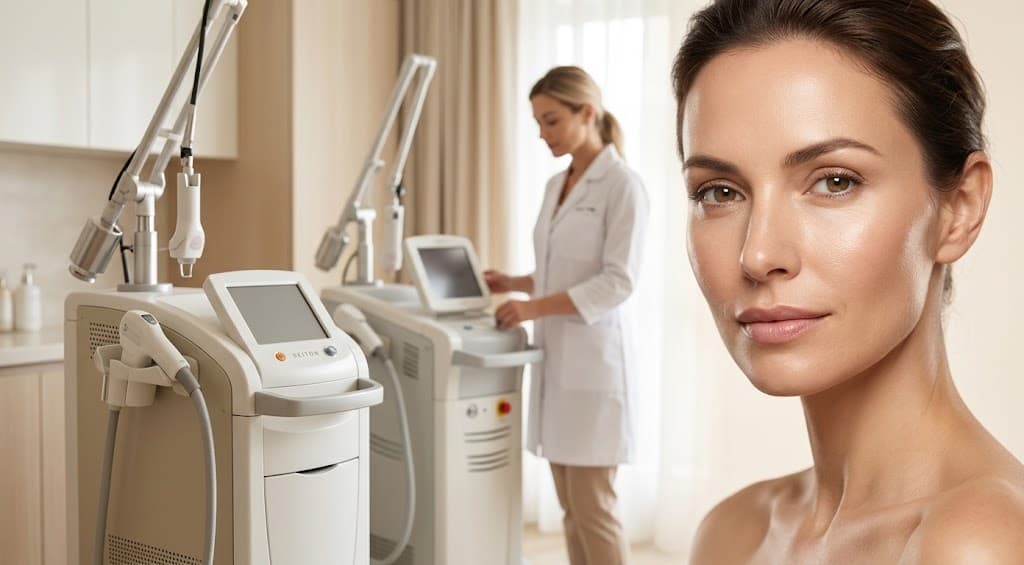
What if your next aesthetic consultation started with understanding your skin instead of choosing a procedure?
That is a useful starting point for exploring regenerative treatments. These services attract attention because they focus on the biological processes behind tissue repair and renewal. However, understanding the science also means understanding the limits of the evidence.
If you’re researching skin rejuvenation in New Braunfels, aim for a clear, realistic treatment plan. At Newman & Company, you can begin that conversation by discussing your concerns, reviewing available services, and asking how a proposed treatment fits your needs.
What Does “Regenerative Aesthetics” Mean?
In aesthetic marketing, “regenerative” often describes treatments intended to support repair processes or stimulate changes in skin tissue. Because it’s a broad term, it should prompt further questions rather than serve as proof of effectiveness.
The FDA warns that some products promoted as regenerative medicine therapies are unapproved and may present significant risks. A treatment’s scientific-sounding name does not establish its safety, effectiveness, or regulatory status.
Ask your provider to identify the exact procedure, product, and intended use. Those details matter more than a general promise of renewal.
Understanding the Collagen Connection
Collagen is a structural protein that helps support the skin. Some aesthetic procedures stimulate collagen production through a controlled treatment response.
Microneedling is one example. It uses small needles to create controlled punctures in the skin. The American Academy of Dermatology explains that this can stimulate collagen production and improve selected concerns, including acne scars, fine lines, and uneven texture. Results develop gradually, and some patients require multiple sessions.
The phrase collagen boost can make this process sound immediate. A better question is: “What improvement is realistic for my concern, and how long might it take?”
Platelet-Based Treatments: Ask About the Specific Procedure
Platelet-rich plasma, or PRP, involves processing a sample of a patient’s blood to concentrate platelets. It has attracted interest for facial rejuvenation, but the American Academy of Dermatology notes that research remains limited and important questions about protocols and outcomes are unresolved. Consider bruising, swelling, discomfort, and infection risks.
You may encounter related terms, including platelet-rich fibrin, or PRF. Do not treat these names as interchangeable.
Newman & Company’s website lists PRF injections and microneedling among its services. Ask the team about the exact procedure being considered and the evidence relevant to that procedure.
Evidence for one platelet preparation should not automatically apply to another.
Be Thoughtful About Emerging Products
Exosomes and stem-cell-related products often come up in conversations about regenerative aesthetics. Separate interest in their potential from proven clinical benefit.
The FDA’s consumer alert states that no exosome products are FDA-approved. It also cautions consumers about misleading claims surrounding regenerative medicine products.
Before agreeing to an emerging treatment, ask about its regulatory status, supporting human studies, administration method, and known risks. These questions help you distinguish research potential from an established treatment option.
Build Your Consultation Around a Clear Goal
“Better skin” is a starting point, but a specific concern makes the conversation more useful.
For example, you might want to discuss acne scarring, uneven texture, or fine lines. Bring your current skincare list and information about previous procedures so your provider can review the full picture.
Consider asking:
- What concern is this treatment intended to address?
- What evidence supports its use for someone like me?
- Who will perform the procedure?
- What risks and recovery should I expect?
- How many appointments might be needed?
- What alternatives should I consider?
A worthwhile consultation should leave you understanding the recommendation, including its limitations.
Explore Your Options at Newman & Company
Science can expand aesthetic possibilities, but informed choices begin with careful assessment.
Contact Newman & Company at 830-620-8444 to discuss available services and consultation options.
Visit us at 617 Gruene Rd., New Braunfels, TX 78130.
Disclaimer: This article provides general educational information and is not medical advice, a diagnosis, or a treatment recommendation. Treatment suitability, risks, recovery, and results vary. Consult a qualified healthcare professional before undergoing any procedure. Mention of a treatment does not imply FDA approval or guaranteed benefit.